
There I sat on the floor next to Héloïse. I was filled with excitement. The Teacher had given us an assignment to complete. There were no directions on the sheet, it was a treasure map. My name was on the top and underneath it in small font, “The Allman Brothers.”
I looked at Héloïse and said, “It’s a clue!” I thought, “Yay! It’s an escape room exercise.” Héloïse was my support person, a non-player character. In healthcare simulation, this person might be called an embedded simulated person or standardized person. This individual is intended to help the person (in this case me) meet the course objectives. Héloïse wouldn’t have a speaking role, but was strategically placed to pop-up to remind me not to quit when I didn’t know what to do next.
While I loved being a Certified Simulation Education Consultant, I didn’t necessarily like being the one in the simulation.
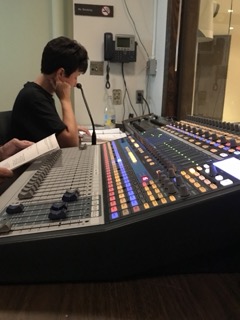
Why? Because sometimes you let fear overcome you. As a nurse and nurse educator, I know, I know what to do, but real life is much different when you don’t have the script with goal markers in front of you.
Back to the treasure map, I felt my mission was to travel the world to find and save the “Gypsy”. The person the Allman Brother’s sang about in their song Melissa. In a strange way, I thought this escape room simulation was actually an allegory within a much larger parable.
Héloïse knew I had a creative and competitive streak in me. We were going to be champions in this simulation. In healthcare simulation, champions are often individuals who “. . . shoulder the responsibility of developing and delivering educational programs . . . they employ creativity, grit, and hard work to help simulation programs obtain buy-in and credibility while they grow in importance and relevance in the context of the [stakeholder] they serve” (Walker & Curran, 2015, p. 315).
The simulation was about to start. I knew if I encountered a “fight, flight or freeze” moment I couldn’t quit. Maybe if I stared at Héloïse long enough she’d telepathically send me answers.
As I wait for the simulation to start, I find myself humming Queen’s 1977 song, We are the Champions.
Reflecting on the Evidence
- Explain what you would do in a simulated event if suddenly you found yourself alone and in a situation of not knowing what to do?
Dedication
To the Gypsy . . . דְבוֹרָה is another bee like me where there is sweetness and light hidden in each sting (AI overview, n.d.). Know that we are only servants on a mission to find and save you.
References
AI Overview. (n.d.). Deborah name meaning. Retrieved February 21, 2025 from https://www.google.com/search?q=parable+definition&ie=UTF-8&oe=UTF-8&hl=en-us&client=safari#ebo=0
Allegory. (n.d.). Oxford Languages. Retrieved February 21, 2025 from https://www.google.com/search?q=allegory+definition&ie=UTF-8&oe=UTF-8&hl=en-us&client=safari#ebo=0
Howell, A.R.S. (2017, October 19). When you have the script and course objectives [Photograph].
Nonplayer character (n.d.). Wikipedia. Retrieved February 21, 2025 from https://www.google.com/search?q=non-player+character+meaning&ie=UTF-8&oe=UTF-8&hl=en-us&client=safari – ebo=0
Parable. (n.d.). Oxford Languages. Retrieved February 21, 2025 from https://www.google.com/search?q=parable+definition&ie=UTF-8&oe=UTF-8&hl=en-us&client=safari#ebo=0
Queen. (June 5, 2017). We are the Champions. [YouTube]. Retrieved February 21, 2025 from https://m.youtube.com/watch?v=tTYJryNgLH8
Walker, K. & Curran, I. (2015). How to create leadership and organizational buy-in. In Palganas, J.C., Maxworthy, J.C., Epps, C.A., & Mancinia, M.E. (Eds.), Defining Excellence in Simulation Programs (pp. 313 -320). Wolters Kluwer.
The Allman Brothers Band. (February 28, 2020). Melissa. [YouTube]. Retrieved February 21, from https://m.youtube.com/watchv=71xvwVQABvw&pp=ygUMTWVsaXNzYSBzb25n
Upstate Medical University Simulation Center. (n.d.). Terminology. Retrieved February 21, 2025 from https://www.upstate.edu/academic-affairs/pdf/terminology-upstate.pdf
Related works
Beck, M. (2024, August 27). Like a Bird. TimeTravelingNurse. https://timetravelingnurse.blog/2024/08/27/like-a-bird/
Beck, M. (2024, March 26). Bumble Bee. TimeTravelingNurse. https://timetravelingnurse.blog/2024/03/26/bumble-bee/
Special Thanks
Kelly Brown, my sister-in-law and reviewer for Entering the Simulation Escape Room.
Tracey Stones, friend, fellow blogger, reviewer and editor for Entering the Simulation Escape Room.
 Time Traveling Nurse
Good work. I want to help you find that gypsy, let me know when to pack.
LikeLiked by 1 person
Welcome aboard!
LikeLiked by 1 person
Pingback: PreBrief or DeBrief: The Art Story – Time Traveling Nurse